DJ Krush and the Aesthetics of Negative Space
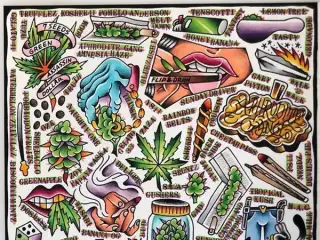
The artwork is layered — graffiti letterforms bleeding into inkwash and shadow, every surface treated as both signal and interference. James Lavelle and DJ Krush arrived at roughly the same moment in the early 1990s, when hip-hop's formal vocabulary was being absorbed into a broader British underground that had already metabolized house, jungle, and dub. Their 1994 collaboration *Strictly Turntablized* (on Mo' Wax) is regularly cited as a founding document of what journalists would shortly begin calling trip-hop, though neither artist was comfortable with the label, and neither was making music that fit its contours.
Lavelle's curatorial vision, genuinely internationalist, signed artists from Japan, the United States, and across Europe, but the label's visual and commercial language consistently coded that internationalism as metropolitan cool rather than cultural depth. Mo' Wax records looked a particular way: they signified. The catalog functioned as a mood board as much as a music collection — its artwork, designed by collaborators including Ben Drury and FUTURA 2000, was inseparable from its sound identity, making Mo' Wax one of the first labels to sell a total aesthetic object.
Krush's early DJ practice, rooted in the turntablist tradition of scratching and mixing as compositional tools, gave his later production work a hand-wrought texture distinct from producers who came to sampling purely through software or studio abstraction. The seams show in his records, and that is the point. Silence, in a Krush track, is not rest but material: it carries weight and direction.
Massive Attack and Portishead deployed the genre's sonic vocabulary in service of recognizably human emotional narratives — longing, paranoia, desire — that gave listeners a relatable entry point Krush consistently refused to provide. The commercial logic of the mid-1990s music industry rewarded trip-hop that retained hooks, vocal performances, and emotional legibility, which meant the genre's most radical practitioners such as Krush, Boards of Canada, and early Techno Animal occupied a permanent critical underground despite their formal influence.
What Krush offered instead was a solitude that resisted easy comfort. Where Portishead's darkness resolved into longing you could recognize and hold, his records proposed something starker: an impersonal quiet with no obvious emotional destination. That is a harder kind of solitude to sell, and the market responded accordingly.

Share
Sign in to join the conversation. Sign in
No comments yet. Be the first to share your thoughts.