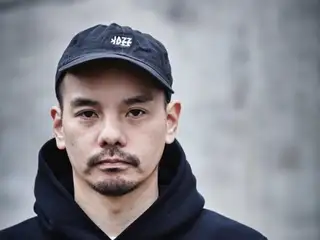
Picture a small venue in Shimokitazawa on a weeknight — not a concert hall, not a club in any commercial sense, but a room where the sound system is taken seriously and the audience knows every artist on the bill by name. The records are dusty and deliberate. The conversation between sets runs longer than it should. Nobody is performing for an algorithm. This is the world Issugi came up in, and more precisely, the world he helped sustain — built not on visibility but on the slow accumulation of trust, craft, and community.
A Scene Built on Proximity, Not Fame
Tokyo's underground hip-hop scene developed its own self-sustaining logic at a careful distance from the J-pop industrial complex. Its infrastructure — small independent labels, specialist record stores, intimate venues scattered across Shimokitazawa and Shibuya — was built by people who cared about the music more than the market. The philosophical DNA ran closer to boom-bap New York than to the domestic mainstream, and that kinship was never incidental.
What the scene prized above all else was restraint — sonic texture, lyricism, and the kind of patience that commercial pressure tends to erode. These were not aesthetic accidents but active commitments, values that had to be chosen and rechosen against easier alternatives. Issugi did not arrive as an outsider pressing his face against the glass. He grew alongside its foundational figures, and his story is inseparable from the scene's own maturation.
The geography mattered in concrete ways. Tokyo neighborhoods function less like distinct districts and more like overlapping communities of practice — places where artists, producers, and dedicated listeners formed relationships that crossed the usual lines between creator and audience. That proximity, physical and social and artistic, is the substrate on which everything Issugi built was grown.
The Dual Role: What It Means to Be Both MC and Producer
The MC-producer is not simply an artist who does two jobs. The dual role collapses the distance between what is said and the environment in which it is said — between lyrical intention and sonic architecture. When a single person controls both languages simultaneously, the record becomes something structurally different: a more unified object, with fewer gaps between concept and execution. This is the position Issugi has long occupied, and it explains much of what makes his work feel so internally coherent.
His production aesthetic gravitates toward lo-fi warmth, deliberate negative space, and a palette drawn from jazz and soul sampling — a sound that reflects a studied relationship with American hip-hop history while remaining shaped by Japanese sensibilities around atmosphere. There is something in the way he uses silence, in the unhurried tempo of his beats, that connects to a broader aesthetic tradition without being reducible to it. The music breathes on its own terms.
As an MC, Issugi's lyrical approach is introspective and dense without tipping into showmanship. He prioritizes internal coherence over punchline culture — his verses reward repeated listening in the same way his beats do. Comparisons to producer-MC hybrids like Madlib or Oddisee are worth acknowledging, but Issugi's version of that model is rooted specifically in Tokyo's underground textures and tempos, not in any direct transatlantic imitation.
In collaborative settings, this dual fluency makes him unusually precise and generous. He understands the architecture of a track from every angle, which means he can meet a collaborator wherever they are — inside the beat or on top of it — without losing the thread of what a record needs to be.
BudaMunk: A Brotherhood Forged in Texture
Among the creative relationships that define Issugi's catalog, the one with BudaMunk stands as the most formative and most enduring. A Japanese-American producer based in Japan, BudaMunk brings production instincts that share core DNA with Issugi's own — boom-bap foundations, dusty sampling, an instinct for atmosphere over aggression. Their collaboration has always felt less like a stylistic negotiation and more like a natural continuation of individual practice.
The records they have made together carry a quality of mutual trust that cannot be manufactured quickly. Neither artist is performing for the other. The ease that comes from years of working in proximity registers in the music as earned relaxation — not looseness, but the confidence of two people who know exactly what they are building together. BudaMunk's bicultural background adds genuine complexity to this shared work: their music inhabits a transatlantic space that is neither imitation nor pastiche but actual synthesis.
The longevity of their collaboration is itself a statement. In a landscape that rewards novelty and fresh pairings, choosing to return repeatedly to the same creative partnership signals something important about the values animating both artists. Their joint output, examined across multiple projects, reveals an evolving conversation — the same aesthetic commitments refracted through different moods and moments, the same architecture explored from new angles over time.
5lack and the Question of Restraint
If BudaMunk represents a complementary production sensibility, 5lack represents a philosophical alignment. One of the most respected figures in Tokyo's underground, 5lack operates with a vocal approach that is minimalist, conversational, and rhythmically relaxed — a surface-level contrast to the density of Issugi's production that creates, in practice, a remarkably productive tension. Their work together rewards the close, unhurried listening the scene has always asked of its audience.
The restraint both artists practice is not a stylistic limitation. It is a deliberate artistic position, one that asks listeners to slow down and resist the impulse to consume quickly. In this sense, the Issugi–5lack axis functions as something close to a philosophical statement for the scene — music that embodies values rather than simply describing them. The connection to Japanese aesthetic traditions around *ma*, the concept of meaningful negative space, and the wabi-sabi appreciation for imperfect, weathered beauty is real, even if it is never programmatic.
5lack's own reputation for avoiding the spotlight mirrors Issugi's in ways that feel less like coincidence and more like shared conviction. Their partnership reinforces a value system in which the work is the statement and personal branding is beside the point. Together, they trace a lineage within Japanese hip-hop that runs a direct line from the genre's global roots while producing something that could only have emerged from this specific place and community.
Independence as Infrastructure: The Label, the Network, the Long Game
Issugi's significance extends well beyond his recorded output. He has been a structural force in building and sustaining the independent infrastructure that makes the scene possible as an ongoing condition rather than a passing moment. Operating within and alongside independent label structures — including Dogear Records, the imprint closely associated with this world — Issugi and his collaborators built a release ecosystem that prioritized artistic control and community cohesion over commercial reach.
The independent model here is not a fallback position. It is a deliberate choice that allows artists to define their own release timelines, their own aesthetic standards, and their own audience relationships without external pressure distorting those decisions. The network functions as a mutual support system: artists produce for each other, appear on each other's records, and share audiences without the competitive logic that tends to fracture more commercially oriented scenes.
What makes this model durable is precisely that it is not dependent on any single artist's commercial fortunes. The community itself is the infrastructure — a demonstration that a small, deeply committed scene can sustain serious artistic work across decades without institutional support or mainstream visibility, provided it builds its relationships on something more solid than shared ambition.
Why the Shadows Matter: Legacy, Influence, and the Art of Not Chasing the Light
Issugi's influence operates through the artists around him as much as through his own catalog. A producer-collaborator who helps others make their best work leaves traces that are harder to map than individual fame but no less real. The decision to remain underground in the context of Japanese hip-hop's commercial landscape is not a circumstance — it is an active and recurring choice, made again with every record, every collaboration, every refusal to reorient toward visibility.
The body of work Issugi and his collaborators have produced across more than a decade constitutes a coherent artistic statement about what hip-hop can be when stripped of its commercial incentive structure. It is music that demonstrates genre as a living form — capable of mutation, capable of taking on the values and aesthetics of a specific place and community while remaining recognizably connected to its origins. For listeners outside Japan, this scene offers a reminder that the global spread of hip-hop has produced not just imitation but genuine evolution.
The architecture Issugi has built — sonic, social, and philosophical — was never designed around a moment, which is exactly why it will outlast one. Scenes built on proximity, craft, and mutual trust do not require the spotlight to survive. They require only people willing to keep showing up, keep making the work, and keep passing the values forward to whoever comes next. In Tokyo's underground, that chain remains unbroken.

Share
Sign in to join the conversation. Sign in
No comments yet. Be the first to share your thoughts.