Picture a late-spring afternoon in Philadelphia, a city that carries its musical history the way old neighborhoods carry their architecture — in layers, each era visible if you know where to look. The crowd at the Roots Picnic is not a festival crowd in the generic sense. It is a gathering with memory, with literacy, with the particular alertness of people who came not just to be entertained but to participate in something they consider theirs. When a figure of consequential weight steps onto that stage, the room holds its breath in a way that has less to do with celebrity and more to do with what that presence implies about the culture's ongoing story.
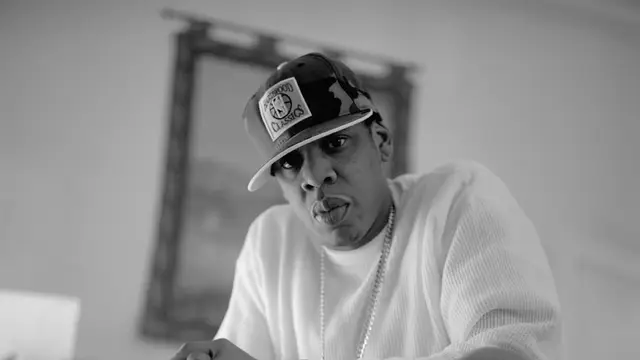
That is the context in which Jay-Z's freestyle at the Roots Picnic must be understood — not as a concert moment but as a cultural event, one that activated questions the hip-hop community has been asking itself, in various forms, for as long as it has had elders to argue about.
The Roots Picnic as Sacred Ground
The Roots Picnic was founded in 2007, and from its first iteration it bore the unmistakable imprint of the band that created it. Questlove and Black Thought built The Roots on a specific proposition: that hip-hop was a living extension of the Black musical continuum, connected to Philadelphia's jazz and soul lineage as surely as it was connected to the South Bronx's park jams. The festival was never a product launch or a branding exercise. It was an argument, made annually, about what the music could be when given room to breathe.
What has distinguished the event across nearly two decades is its curatorial integrity. Where the corporate festival circuit programs by algorithm and streaming metrics, the Roots Picnic has consistently assembled lineups that reflect Black artistic breadth across generations — jazz figures alongside MCs, soul singers beside spoken-word artists, elders and newcomers on equal footing. It is one of the few spaces in the contemporary music landscape where that intergenerational community gathers under conditions defined by the community itself rather than by commerce.
Philadelphia's relationship to hip-hop's East Coast power structures adds a specific charge to this geography. The city produced foundational figures and scenes that the New York-centric hip-hop canon has not always centered. When artists from Brooklyn or Harlem or the Bronx appear at the Roots Picnic, they are stepping onto ground with its own authority, its own standards, its own memory of what was owed and what was overlooked. The stage is not neutral. Performing there implies an endorsement of its values — community, craft, cultural stewardship — and that implication makes the use of that platform for personal or industry conflict something the audience will not simply receive. It will interpret.
The Freestyle as Form: A History of Dual Purposes
The freestyle has always carried two contradictory energies simultaneously, and that productive contradiction is central to its power. Its roots lie in the improvisational practices of the South Bronx's early hip-hop scene, where spontaneous verbal skill was both communal entertainment and a mechanism for establishing hierarchy. To freestyle well was to earn standing. To be defeated in a cipher was to cede it. The form encoded competition inside celebration from the beginning, and no amount of commercial maturation has dissolved that original chemistry.
The cipher — the structure through which group freestyling traditionally operates, democratic and circular and open to all participants — was originally an egalitarian space. Commercial status was irrelevant inside it. What mattered was what you could do with language under pressure, in real time, in front of people who would hold you accountable for every weak bar. It was a counterweight to the industry's gatekeeping, a space the culture controlled entirely for itself. That democratic origin is why the cipher carries symbolic weight that a produced record, however brilliant, cannot fully replicate.
As hip-hop's commercial footprint expanded through the 1990s and into the 2000s, the freestyle became increasingly complex as a performance of authenticity. Artists with platinum records and corporate partnerships used the freestyle to signal that their roots remained intact, that the culture they had leveraged for commercial success had not been abandoned in the transaction. The improvisational claim — the suggestion that what you are hearing was made in the moment — adds a layer of perceived candor that distinguishes the form from the diss track, even when the content has clearly been prepared. Eminem's cipher in *8 Mile*, battle rap's competitive circuits, the BET Hip-Hop Awards cyphers: the most consequential public freestyles have always derived their power from the tension between vulnerability and dominance, between openness and control.
Jay-Z and the Architecture of Long-Term Cultural Authority
Jay-Z's trajectory from Marcy Houses in Brooklyn to the apex of the global entertainment industry is inseparable from hip-hop's own transformation from subcultural movement to economic force. He did not merely benefit from that transformation; he helped engineer it, functioning simultaneously as artist, entrepreneur, and argument for the culture's parity with any other form of American achievement. That dual role as creator and institution is the foundation of the specific authority he carries.
*The Blueprint*, released in September 2001, cemented his place not just as a hit-maker but as a figure invested in hip-hop's artistic canon. The album moved between reverence for the Notorious B.I.G. and Frank Sinatra with a fluency that made the argument for hip-hop's cultural seriousness more persuasively than any manifesto could. His subsequent catalog extended that argument — sometimes brilliantly, occasionally unsteadily — but the accumulated body of work placed him inside hip-hop's critical conversation at a level that commerce alone cannot purchase.
The elder role in hip-hop carries obligations rooted in the culture's own codes. Elders are expected to model restraint under provocation, to protect younger artists from exploitation, to invest in the community's infrastructure rather than extract from its conflicts. Jay-Z has actively cultivated that identity — through artist development, through public commentary on industry architecture, through the institutional weight of his and Beyoncé's combined presence in Black cultural life. The cultivation of that identity is genuine and constructed simultaneously, as all cultural authority is, and it creates a particular set of expectations that cannot be quietly set aside when inconvenient.
The contradiction embedded in his position is that hip-hop's competitive DNA never fully yields to institutional authority. A figure can occupy the elder and combatant roles simultaneously, but not without friction — and the friction is precisely where the culture's most interesting self-examination happens.
Accountability vs. Performance: When Grievances Go Public
The central ethical question raised by a senior artist using a revered public stage to address personal or industry conflicts is whether the act constitutes genuine accountability or strategic performance. These possibilities are not mutually exclusive, but the distinction matters, and hip-hop's own critical tradition has developed precise tools for making it.
Genuine accountability in musical form has a recognizable tradition in Black American music. Artists from Curtis Mayfield to Kendrick Lamar have used public performance to name systemic injustices, personal failures, and community wounds in ways that invite collective reflection rather than personal vindication. The orientation of the address makes the difference: is the artist exposing something true and important, or using the aesthetics of candor to consolidate their own position? The performance of accountability — deploying the formal signals of honesty while actually winning a dispute — is equally well-documented, and hip-hop's audience has historically been sophisticated enough to apply that distinction in real time.
When a conflict involves industry power dynamics, the question of who controls the narrative cannot be separated from who controls the resources. A powerful figure choosing to go public on a community stage rather than through the private channels available to someone of their stature is making a calculated choice about terrain. The Roots Picnic audience is among hip-hop's most critically engaged listening communities. It carries both deep affection for the artists it welcomes and correspondingly high expectations of them — a combination that produces a kind of accountability pressure that a stadium tour or a streaming platform cannot replicate.
Score-settling through art has a long and legitimate place in the tradition. Its credibility has always depended on whether the artist is revealing something the audience needed to hear or simply using cultural prestige to win an argument they could not resolve through other means.
Hip-Hop's Elder Problem: Authority, Accountability, and the Generation Below
Jay-Z's appearance at the Roots Picnic sits within a broader, ongoing conversation about how hip-hop manages the transition of its founding and dominant generation into positions of institutional authority. The culture has always been constitutionally skeptical of power — that skepticism is encoded in its origins, in communities systematically excluded from American institutional life — and it applies that skepticism to its own leaders as readily as to external ones. The child eventually measures the parent by the values the parent claimed to hold.
The generational conversation in hip-hop has never been simply nostalgic. It has always involved real arguments about who controls resources, who controls narratives, and who gets to determine what counts as legitimate. When Golden Era figures speak about the culture's direction, they are not merely waxing elegiac about a departed golden age; they are asserting claims about standards, about inheritance, about what the next generation owes and is owed. Those arguments carry material consequences, and the community knows it.
When senior figures engage in public conflict, younger artists and fans face a loyalty test that the culture's own values actively resist. Reverence for elders exists in hip-hop alongside a permanent expectation that every claim to greatness must be continuously earned and continuously challenged. These are not contradictory impulses but complementary ones, and the tension between them is generative rather than paralyzing — unless one party uses their institutional weight to short-circuit the challenge rather than meet it.
The specific optics of a billionaire rapper using a grassroots festival stage to settle scores carries implications that extend well beyond hip-hop. The question of how wealth and cultural authority interact — whether accumulated institutional power converts the language of community into a tool for individual advantage — is one the broader culture wrestles with constantly. Hip-hop, because of the clarity of its foundational values and the sophistication of its audience, is simply better positioned than most cultural spaces to name that dynamic plainly. The most enduring elder figures in Black music, among them James Brown, Prince, and yes, Jay-Z himself at his best, are those who held competitive fire and communal generosity in productive tension, neither extinguishing one for the other.
What the Stage Reveals
The live performance remains hip-hop's most unmediated form of self-presentation. No production filter, no label intermediary, no publicist standing between the artist and the consequences of what they choose to say. That directness is why hip-hop has always treated the stage as a site of truth-telling, and why what artists choose to do with that space carries disproportionate cultural meaning. The freestyle, specifically, forecloses the defense of careful construction. You are accountable for it in real time, in front of people who will remember.
The Roots Picnic functions, in this context, almost as a mirror the culture holds up to those it has elevated. Its programming philosophy, its audience, its geography, its founding logic — all of it reflects a set of values back at whoever stands on its stage. What do you stand for? What are you doing with the authority the community gave you? The festival does not ask those questions gently, and it does not accept answers that rely purely on legacy.
Hip-hop has always demanded that its greatest figures remain legible to the community, even as success distances them from it. The freestyle is one of the primary mechanisms through which that legibility is tested — not because improvisation guarantees honesty, but because the form's history and associations invoke a standard of authenticity that the artist must then either honor or expose as rhetorical. When a figure of Jay-Z's stature reaches for that form in a charged moment, the audience is not simply listening for skill. It is listening for what the skill is in service of.
The most productive reading of moments like this one is not a verdict on any individual artist's character. It is an invitation to examine what the culture expects of its elders, how those expectations have evolved across generations, and whether the inherited forms — the freestyle, the cipher, the festival stage — can still hold the weight of the questions the culture needs to ask. Every tradition that survives long enough to produce elders must eventually ask whether those elders serve the tradition or whether the tradition has come to serve them. Hip-hop, with its foundational commitment to authenticity and its deep-rooted suspicion of unchecked authority, is better equipped than most to ask that question without flinching. The answer, as always, will be worked out in public, on stages exactly like this one.

Compartilhar
Entre para participar da conversa. Entrar
Ainda não há comentários. Seja o primeiro a opinar.